
An elephant and a big-eared fan: the origin of 'Pam Pam Orellut'
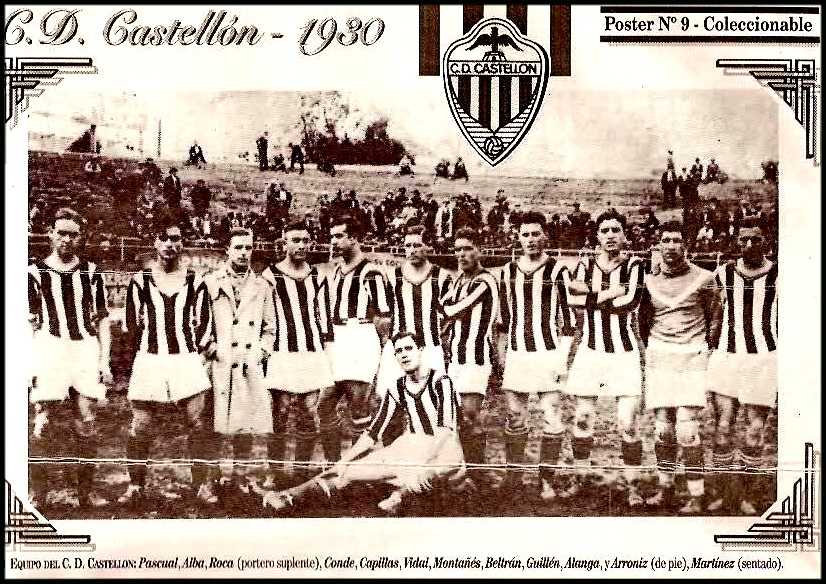
A huge part of the identity of CD Castellón is the iconic chant and song ‘Pam Pam Orellut’. Fans of the club are referred to as orelluts, and it is even used as a kind of greeting between fans. But what is an orellut, and what’s the story behind it? The tradition came to be through two intertwined stories, and then grew throughout the decades until the present day.
Orellut is Catalan for someone who has large ears. As such, anywhere but Castellón it might be actually considered somewhat offensive. But it all started with the Albinegres’ first real star player and iconic figure José ‘Pepe’ Alanga in the 1920s.
An ebony elephant
Born in 1899, the goalkeeper was a bricklayer by trade and became immensely popular with the Castellón fans. Rival teams came to play Alanga’s team, not Castellón. He became known for placing a small ebony elephant in his goal, which his brother had brought back from the Hispano-Moroccan war as a souvenir.
When Alanga would make a great save, fans would then cheer “Olé, Orellut” or “Molt bé Orellut!” (Very good, big ears!). Soon, this extended to the rest of the team and anyone connected with Castellón.
A big-eared fan
Jaime Varella was an enthusiastic Castellón fan, who could constantly be found near the touchline, cheering on his team. A man with oversized ears, he became known for clapping twice in quick succession to encourage the players, hence the pam pam.
A group of mischievous fans soon got in the habit of standing behind him, and whenever he clapped, would shout “Orellut!” to tease poor Jaime. In order to avoid provoking him, they would pretend the chant was in fact towards the ebony elephant in Alanga’s goal, and that he had nothing to do with it.
It soon gained in popularity, due to the ease with which it could be rhymed with other words “Pam pam Orellut, el Valencia ha perdut” (Valencia lost). The club got promoted to the First Division and was refounded in 1939 after the end of the Spanish Civil War. It was then that the club decided to adopt it as its official anthem, and a song was composed by Eduardo Bosch, with lyrics by Vicente Andres.
Further developments
After six seasons in the First Division, the club slipped down the leagues, and the song was largely forgotten about until 1971-72, when the Albinegres were once again promoted to the first tier. Sports journalist Crescencio López del Pozo aka Chencho appealed to Castellón’s musicians to rescue it from the past, but was met with little enthusiasm. With no money on offer and no sponsors, he was forced to give up on the idea. However being given the chance to appear on Radio Castellon show Castelloneries, he took the chance to once again pitch his idea of rewriting the old anthem.
Through various contacts, Chencho was able to get in touch with Vicente Andres, the original writer of the song and the only living member of the original duo. He rewrote the song, updating the lyrics. Eventually, on the night of 29 May 1972, the song was recorded in studio as the version we now know today (and you can listen to below). It was a great bit of teamwork and collaboration to create one of the most iconic club anthems in Spanish football.