What is a "number 9" anyway?
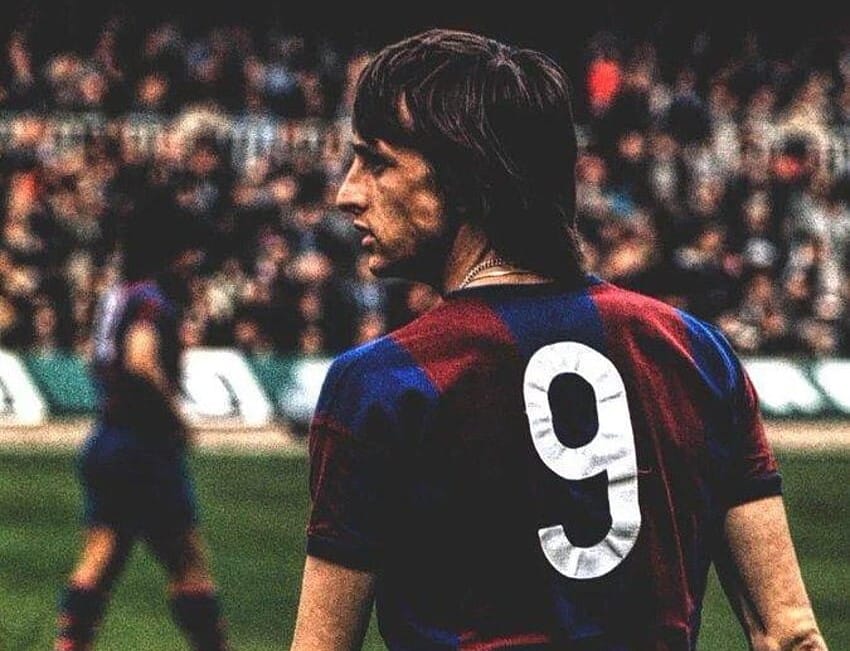
Conventional football wisdom states that in every starting XI, there is at least one striker. In other words, a player clearly further forward that everyone else, whose main task is to to score goals. That player is normally the focal point in the attack, stays in a relatively fixed position and gets the ball played in to him.
In the 1970s, Rinus Michels and Johan Cruyff decided that was not the optimal way to play, and what is now known as Total Football was born. It lead the most successful period in Ajax’s history, and almost took the Netherlands to World Cup glory. A concept based in total positional fluidity, high pressing and team cohesion, which also requires high fitness levels and technical acumen. The system has been adapted by the likes of Pep Guardiola and Roberto De Zerbi in recent times, albeit with a much more positional emphasis. The former still allows Haaland to play very much as a number 9, with City’s attack built around his talent. De Zerbi is more focused on structure playing out of defence, but even Brighton didn’t really play with a “number 9” last year. Their top scorer was attacking midfielder Alexis Mac Allister, now of Liverpool.
Dick Schreuder, I feel, is much more in line with the 1970s Dutch style of total football. Even the modern game, so much of which has been permeated by Cruyffian beliefs, PEC Zwolle’s play last year still stood out due it it’s fluidity, relentless pressing and positionless tactics. Just take a look at these two sequences from their game against Roda last season.
The first one starts out with veteran centre back Bram van Polen playing the ball out of defence, but instead of simply laying it off and stopping his advance, he continues his run into the open space, eventually finding receiving the ball back and finding himself alone one on one against the keeper.
The second features “number 9” Lennart Thy playing 40 metres from the opponent’s goal as an attacking midfielder, with essentially four teammates further up the field. He passes to “central midfielder” Dean Huiberts playing as a winger, who crosses to Apostolos Vellios for the great finish. The Greek, a player who himself often featured further out wide for Zwolle last year in a hybrid attacking role.
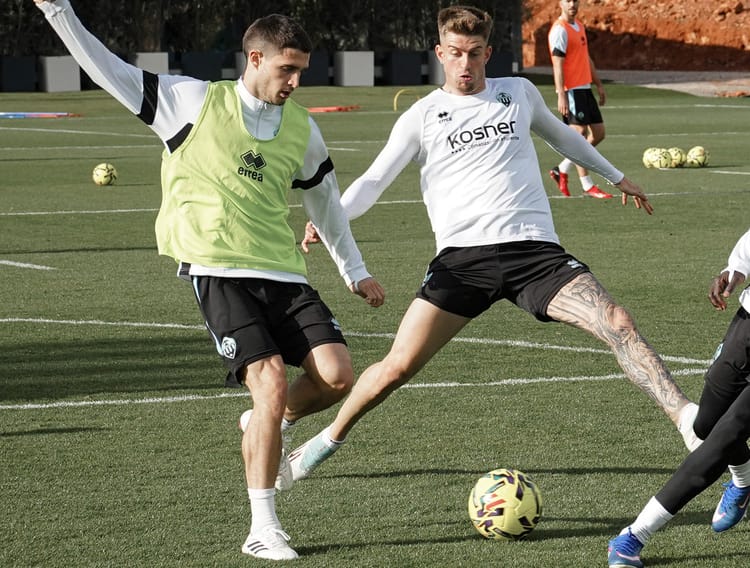
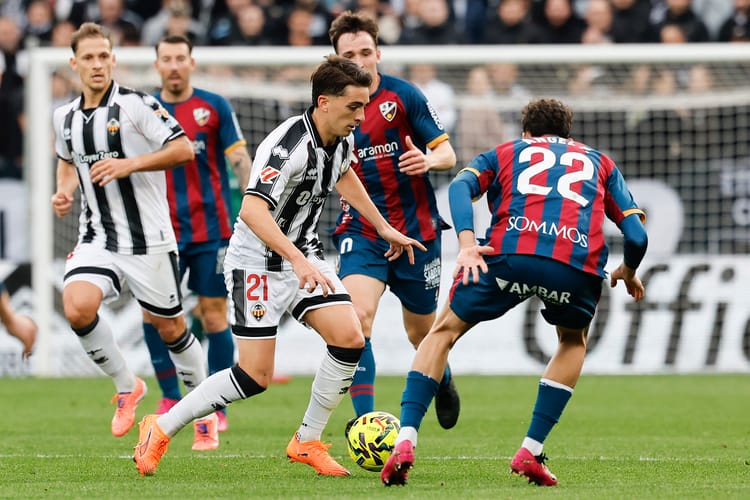
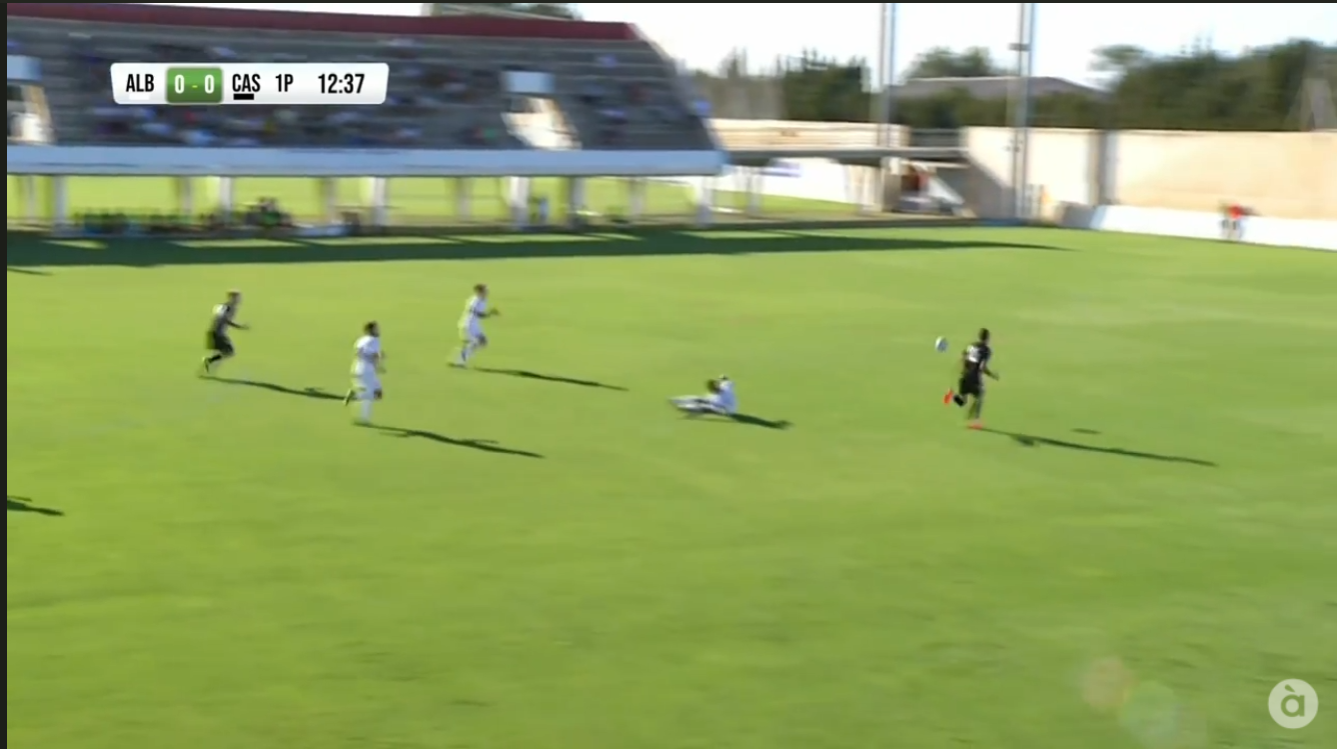
And it’s clear from Castellón’s pre-season so far, that Schreuder wants to see something very similar at Castalia this season. The three-at-the-back set up has been a mainstay, with either Jesús De Miguel or Raul Sánchez in the “striker” role so far. But both have often dropped deep or wide, and they are not always the furthest up the pitch for Castellón. Here’s the opening goal against Albacete. The player highest up the pitch is Manu Sánchez, who instead of tracking back when Castellón lost possession, simply stayed up front as the winger/striker and took advantage when his defender didn’t deal with the long pass, leaving him one on one to score. Raul Sánchez dropped back further (the other Castellón player in the picture), and attacking midfielder Isra Suero isn’t even visible.
So the notion that the team needs a defined number 9 should not really be the concern, especially in this system. To adapt a quote from Moneyball:
People who run ball clubs (and fans) think in terms of buying players. Your goal shouldn’t be to buy players, your goal should be to buy wins. And in order to buy wins, you have to buy goals.
Let’s look at Dick’s PEC Zwolle last season. Their total of 2.45 non-penalty goals was second in the league only to Heracles, but also over 32% better than the third placed team - an absolutely huge margin. Heracles, for the record, scored almost 38% more goals than the third placed team.
Let’s translate these stats to Primera RFEF. In Castellon’s group last year, Osasuna B were actually the highest scoring team, with 51 goals (finishing seventh), and Eldense (finishing second) scored the second most, with 50. Let’s use that nice round number as a reference.
If Castellón want to win the league, let’s say scoring 32% more goals than the second or third placed team, that means a 69 goal target, or 1.82 goals per game. Looking at previous seasons, such a total would not only be a record but also all but guarantee promotion. Villarreal B set the record in the Primera RFEF era, scoring 65 and obtaining promotion in 2021-22. Even getting 60 would be a huge improvement on last season, and I think that would be the minimum for direct promotion depending on how quickly the team fully adapts to the system.
President Bob Voulgaris, while not ruling out adding another “number 9”, does not see it as make or break. But it’s a lot of pressure on the shoulders of De Miguel, Raul Sánchez, De Leon and co, whatever role they play. We’ll have to see what happens as the Albinegres will look to close out preseason with a win against Cornellá at Castalia on Sunday before opening the season against Málaga on 26 August.